Kia ora koutou,
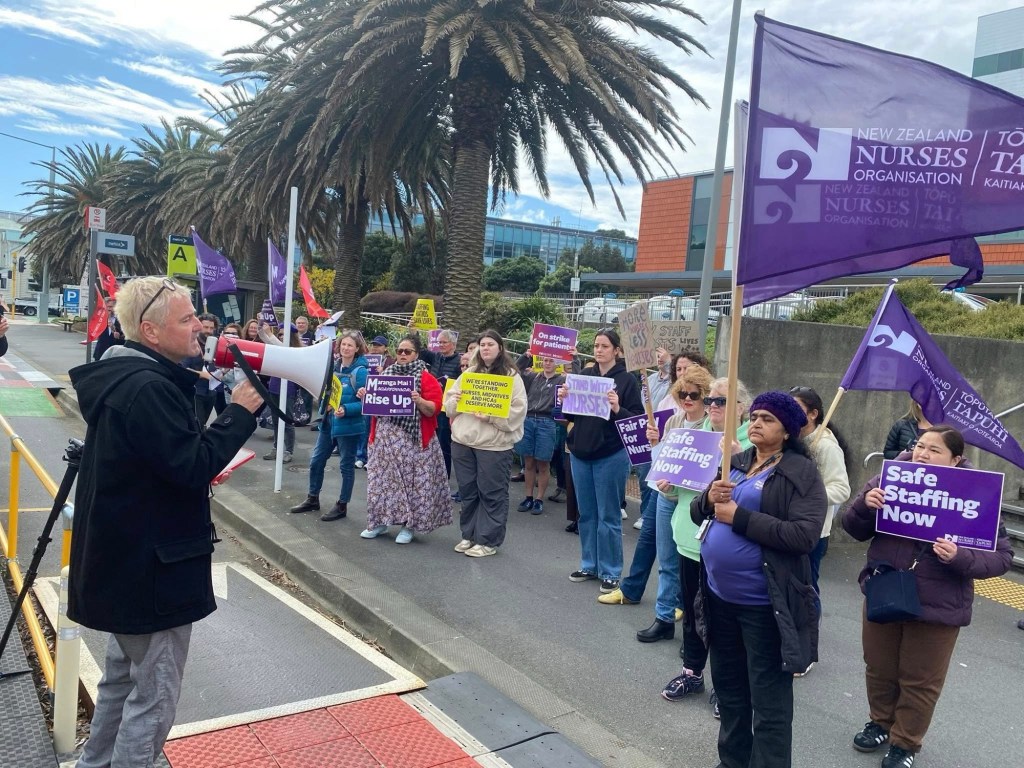
My name is Grant Brookes. I am a Mental Health Nurse here at Wellington Regional Hospital Ngā Puna Wai Ora, and I’m an NZNO delegate.
At our last strike in July, we had NZNO President Anne Daniels speaking to us. She is in Ōtepoti Dunedin today, supporting the picket line down there, so I’ve been asked to speak. I’ve got notes that have been sent through containing some of what she wanted say.
𝐁𝐮𝐭 𝐰𝐡𝐲 𝐚𝐦 𝐈 𝐨𝐧 𝐬𝐭𝐫𝐢𝐤𝐞 𝐭𝐨𝐝𝐚𝐲?
I’m on strike today because I care about staffing and patient safety.
I love my job as a Te Whatu Ora nurse, but understaffing prevents me doing the job I love. I started work at Wellington Hospital in 2002. I’ve seen many changes over the years – and recently, changes for the worse. The understaffing in 2025 is so critical that I am unable to do the most important part of my job – talking with people, hearing them in their distress and supporting them through it.
I work in mental health. What does today’s understaffing look like in our area?
Through my role as an NZNO delegate, I have access to Te Whatu Ora’s real-time data on understaffing in the Mental Health, Addictions and Intellectual Disabilities Service. Across MHAIDS last month, 12.7% of all hours worked were overtime. That means that on average, one staff member in 8 on any given shift is working overtime.
And even with an average of one or two staff members on each shift working a 16 hour day, in August our Directorate experienced Critical Care or Significant Care deficits on day shifts fully one third of the time, according to Te Whatu Ora’s own figures.
This care deficit means stressed and burnt out staff.
But what does it mean for our tāngata whaiora, our patients? As our ED colleagues can confirm, it means that our tāngata whaiora can sit in the Emergency Department for days on end waiting to be admitted – surrounded by patients in states of distress, or behaving in a way that causes distress to others. It can mean our tāngata whaiora waiting months – or even years – for specialist mental health rehabilitation.
Or it can simply mean that they get turned away from accessing mental health services altogether, because there aren’t the resources to provide care. The impact is greatest of all for our Māori and Pacific peoples. We see the evidence of the growing number of people turned away daily on our city’s streets.
𝐖𝐡𝐚𝐭 𝐢𝐬 𝐭𝐡𝐞 𝐧𝐚𝐭𝐢𝐨𝐧𝐰𝐢𝐝𝐞 𝐬𝐭𝐫𝐢𝐤𝐞 𝐚𝐛𝐨𝐮𝐭?
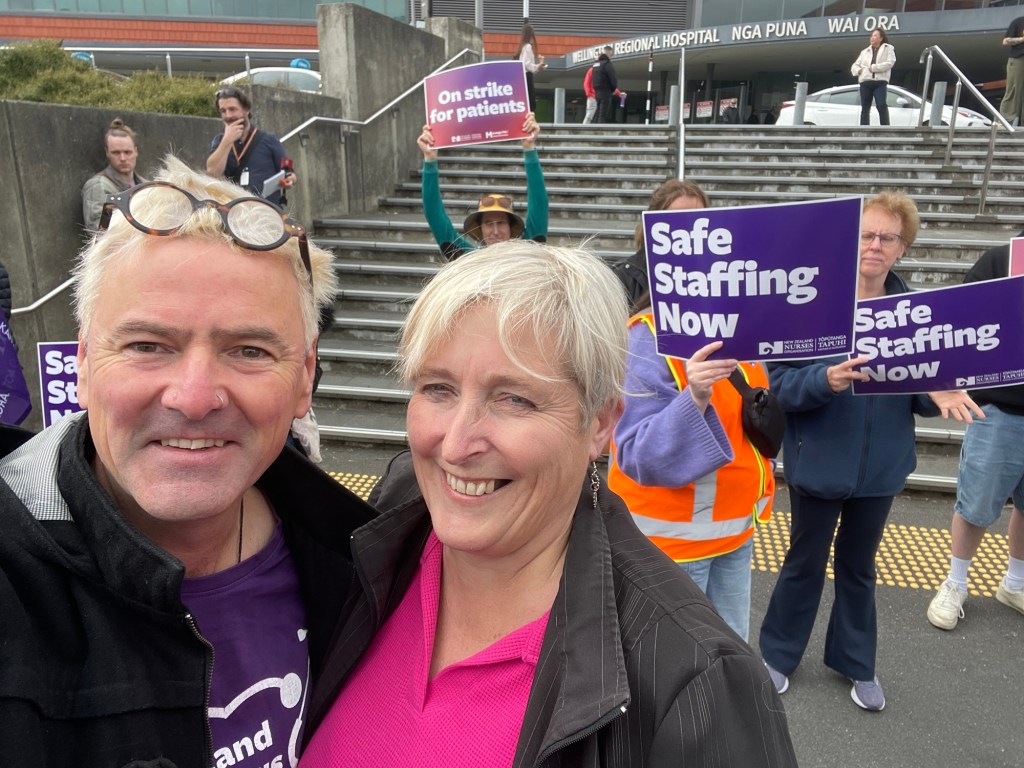
More than 36,000 Te Whatu Ora nurses, midwives, health care assistants and kaimahi hauora voted for this further strike action after Te Whatu Ora failed to resolve ongoing concerns about understaffing like these. We voted – and I voted – strongly to go on strike on two days from 7am to 11pm on Tuesday 2 September and Thursday 4 September.
NZNO members are clear that we want to keep fighting for the safety of our patients and to reduce preventable patient deaths. We have had enough of our patients waiting for care – or missing out entirely – because we’re too busy to get to them. We became healthcare workers because we want to help people and give them the care they need. Not risk their suffering due to a lack of staff.
Patients are at risk because the Coalition Government is choosing cost cutting over patient need. We don’t get paid for striking but we do it for the sake of our patients. Te Whatu Ora needs to do more to retain our nursing workforce, employ graduate nurses and ensure patients get the care they need.
There were 30,000 New Zealanders who moved to Australia in the past year. We all know some of our nursing colleagues who burnt out and moved there for better conditions and wages.
We need more Māori and Pacific nurses so there are culturally appropriate ratios that ensure the right nurses are caring for the right patients at the right time.
Despite Te Whatu Ora’s and the Government’s denials, Aotearoa desperately needs more nurses, midwives, health care assistants and kaimahi hauora. Better pay and conditions would make nursing more attractive and help keep the nurses we have.
To fix understaffing and ensure patient safety we’re calling for the following:
1. We need mandatory, culturally-safe staff-to-patient ratios.
2. We need Te Whatu Ora to recommit to CCDM for safe staffing.
3. We need the full employment of new graduates.
We’re here to fix the health system and we won’t stop. It’s going to require a long-term effort from NZNO members to win the safe staffing that we and our patients need, and today is just the start.
So let’s finish with a chant.
– When patient safety is under attack – stand up, fight back
– When nurses rights are under attack – stand up, fight back
– When health care assistants are under attack – stand up, fight back
– Health workers, united, will never be defeated!
 Grant Brookes | Nurse & Trade Unionist